Planetary Drishti in Vedic Astrology: How Saturn, Jupiter, Mars & Rahu Influence Every House
One of the most powerful and fascinating concepts in Vedic astrology is Drishti, commonly translated as planetary aspect or planetary sight.
In astrology, planets do not influence only the house they occupy. They also project energy toward other houses through their drishti, affecting emotions, career, relationships, wealth, health, psychology, and karmic experiences.
Understanding planetary drishti is essential because many life events are influenced not only by planetary placement but also by the houses planets aspect.
This guide explains how four powerful planets—Saturn, Jupiter, Mars, and Rahu—affect different houses through their drishti according to Vedic astrology.
What Is Drishti in Vedic Astrology?
The Sanskrit word Drishti means “sight” or “vision.”
In astrology, it refers to the energetic influence a planet casts toward specific houses from its placement.
You May Also Like



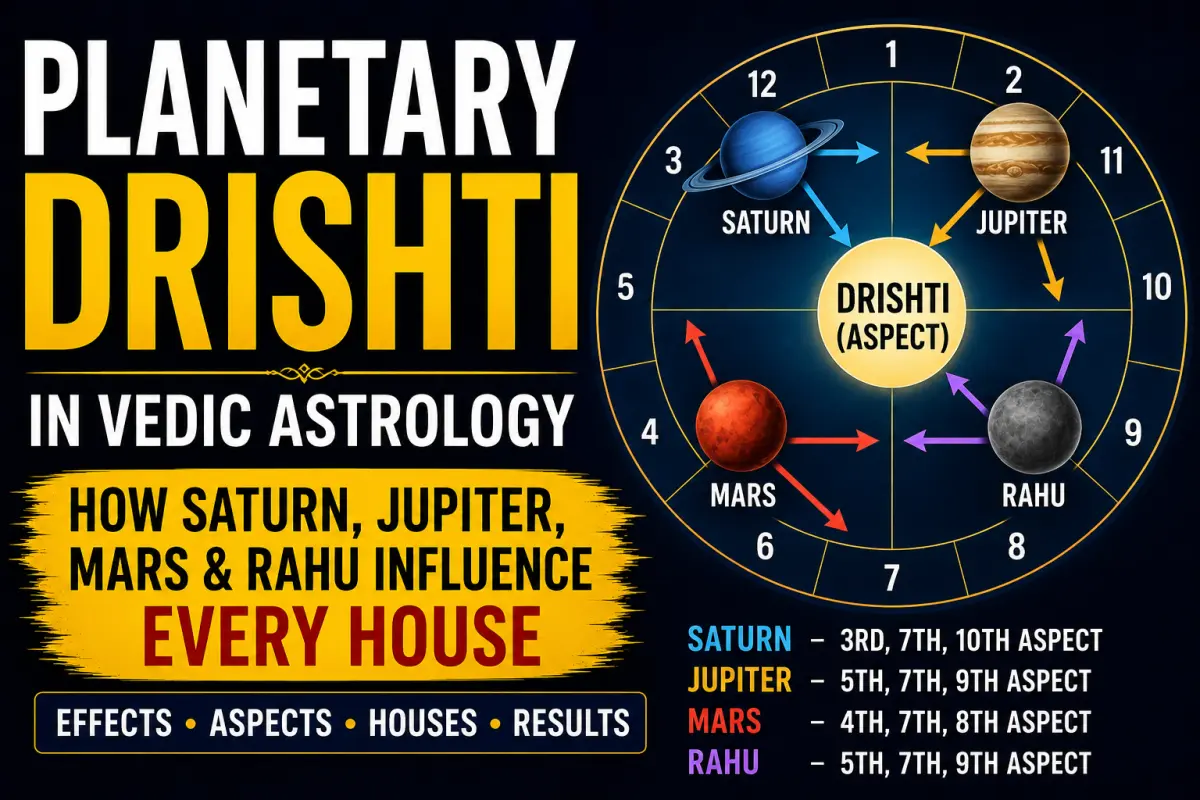
Every planet aspects the 7th house from itself, but some planets also have special drishtis:
| Planet | Special Drishti Houses |
|---|---|
| Saturn | 3rd, 7th, 10th |
| Jupiter | 5th, 7th, 9th |
| Mars | 4th, 7th, 8th |
| Rahu | 5th, 7th, 9th (commonly used in many traditions) |
These aspects create powerful directional influences that shape life experiences.
Saturn’s Drishti: Pressure, Karma & Discipline
Saturn (Shani) represents:
- Karma
- Responsibility
- Discipline
- Delays
- Maturity
- Long-term lessons
Saturn’s drishti is considered heavy because it creates pressure and realism in the houses it aspects.
Saturn’s 3rd Aspect
Saturn’s 3rd drishti increases effort, struggle, persistence, and discipline.
The house receiving this aspect may experience:
- Slow progress
- Repeated effort
- Mental pressure
- Long-term stability after struggle
Example:
If Saturn aspects the 10th house through its 3rd drishti, career growth may become slow but stable.
Saturn’s 7th Aspect
This aspect strongly influences relationships, partnerships, emotional balance, and social interaction.
Possible effects include:
- Relationship delays
- Emotional distance
- Karmic partnerships
- Maturity through relationships
Strong Saturn influence can create relationships based on responsibility rather than emotional impulsiveness.
Saturn’s 10th Aspect
The 10th drishti is considered one of Saturn’s most powerful aspects.
It creates:
- Career pressure
- Responsibility overload
- Long-term ambition
- Public image restructuring
- Karmic career lessons
Although difficult initially, this aspect often creates lasting success through discipline.
Jupiter’s Drishti: Wisdom, Protection & Expansion
Jupiter (Guru) is considered one of the most benefic planets in Vedic astrology.
Jupiter represents:
- Wisdom
- Expansion
- Growth
- Knowledge
- Spirituality
- Prosperity
Jupiter’s aspects usually improve and protect the houses they influence.
Jupiter’s 5th Aspect
This aspect increases:
- Intelligence
- Creativity
- Learning ability
- Positive thinking
- Spiritual understanding
When Jupiter aspects the 5th house, it may support education, children, creativity, and emotional wisdom.
Jupiter’s 7th Aspect
This aspect improves:
- Relationships
- Marriage stability
- Emotional understanding
- Partnership wisdom
People with strong Jupiter drishti often attract supportive and emotionally mature relationships.
Jupiter’s 9th Aspect
The 9th aspect is deeply spiritual and philosophical.
It may increase:
- Luck
- Spirituality
- Higher learning
- Faith
- Life guidance
- Wisdom from experience
This aspect is often associated with protection during difficult life periods.
Mars Drishti: Action, Aggression & Energy
Mars (Mangal) represents:
- Energy
- Courage
- Conflict
- Action
- Competition
- Passion
Mars drishti creates strong energy in the houses it aspects.
Mars’ 4th Aspect
This aspect may create:
- Emotional intensity
- Restlessness
- Strong ambition
- Domestic tension
When influencing home-related houses, Mars may create emotional instability or aggressive environments.
Mars’ 7th Aspect
This aspect strongly affects:
- Relationships
- Conflict patterns
- Passion
- Sexual energy
- Partnership competitiveness
If uncontrolled, it may create arguments and impulsive reactions.
Mars’ 8th Aspect
This powerful aspect influences:
More Astrology Articles


- Sudden events
- Transformation
- Psychological intensity
- Hidden fears
- Karmic upheaval
It can create powerful transformation through challenge and pressure.
Rahu Drishti: Obsession, Illusion & Sudden Change
Rahu is one of the most psychologically intense forces in astrology.
Rahu represents:
- Obsession
- Material desire
- Illusion
- Sudden ambition
- Foreign influence
- Psychological intensity
Rahu’s aspects often amplify desire and mental restlessness.
Rahu’s 5th Aspect
This aspect may increase:
- Obsessive thinking
- Creative brilliance
- Mental intensity
- Risk-taking behavior
It can create unconventional intelligence and unusual thinking patterns.
Rahu’s 7th Aspect
This aspect influences relationships and social interaction.
Possible effects include:
- Karmic attraction
- Emotional confusion
- Intense relationships
- Foreign or unusual partnerships
Relationships may feel emotionally addictive or psychologically intense.
Rahu’s 9th Aspect
This aspect may influence:
- Belief systems
- Spiritual confusion
- Unconventional philosophy
- Sudden worldview changes
It often pushes people toward unusual life experiences and nontraditional thinking.
Why Drishti Is Important in Real Astrology
Many people focus only on planetary placement, but experienced astrologers analyze drishti carefully because:
- Aspects activate houses indirectly
- Planetary energy spreads beyond one position
- Life themes become interconnected
- Psychological patterns become clearer
For example:
- A strong Saturn aspect may delay career success
- Jupiter aspect may protect finances
- Mars aspect may intensify relationships
- Rahu aspect may increase obsession and ambition
Psychological Meaning of Planetary Aspects
Planetary drishti also represents internal psychological influence.
For example:
- Saturn drishti may create fear and discipline
- Jupiter drishti may create optimism and wisdom
- Mars drishti may create aggression and courage
- Rahu drishti may create obsession and restlessness
This is why astrology often reflects both external events and inner psychology simultaneously.
Can Benefic Aspects Reduce Difficult Effects?
Yes. Strong Jupiter drishti especially is believed to reduce negative planetary influence and increase protection, wisdom, and emotional balance.
Similarly:
- Saturn may stabilize impulsive behavior
- Mars may increase courage and ambition
- Jupiter may improve emotional maturity
- Rahu may increase innovation and unconventional success
The final result depends on the complete birth chart.
Conclusion
Planetary drishti is one of the most important foundations of Vedic astrology because planets influence not only where they sit—but also where they direct their energy.
Saturn creates discipline and karmic lessons, Jupiter expands wisdom and protection, Mars intensifies action and transformation, while Rahu amplifies desire and psychological intensity.
Understanding planetary aspects helps reveal how different areas of life become connected through karma, psychology, emotion, ambition, and spiritual evolution.
Sometimes the most powerful planetary influence is not where a planet stands—but where its vision reaches.